Live dealer
Where Live Dealer Studios Must Be: State Rules Behind the Live Casino Stream
Why live dealer tables at US online casinos are streamed from studios inside the state and what that means for game choice and hours.
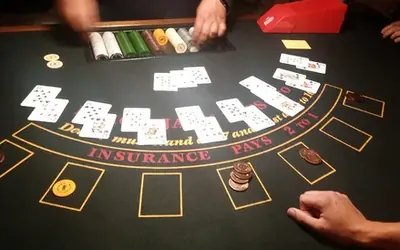
When a Pennsylvania player opens a live dealer blackjack table on a regulated online casino, the dealer is almost certainly sitting in a studio in Philadelphia or inside a licensed casino property within the state. In New Jersey, the roulette wheel is spinning at a facility the Division of Gaming Enforcement has inspected and approved, often at Tropicana Atlantic City or a dedicated studio nearby. These are not production choices made for convenience. Pennsylvania and New Jersey law require the streaming equipment, the servers that record every wager, and in many cases the physical studio itself to sit inside state borders or at a board-approved location. The location is part of the game’s legality. Without it, the table is not a state-regulated live dealer game.
Rated by our editors on bonus terms, payouts, banking and support.Some links earn us a commission · Advertising disclosure21+ Gambling problem? Call 1-800-MY-RESET
The rule that sets this in motion appears in plain language in the Pennsylvania Code. The state defines a “live gaming studio” as a physical location that uses live video streaming technology to provide live casino games. That studio, along with every interactive gaming device and piece of associated equipment, must be placed in a location the Pennsylvania Gaming Control Board has approved. The Board has been explicit about where that can be: a restricted area on the premises of a licensed casino, a restricted area within the same county, or another location inside the United States that meets specified limits. Even the server that resolves DNS inquiries for interactive gaming has to sit in a secure data center, and any backup servers must be at a separate premises within the Commonwealth. The infrastructure is not allowed to wander.
New Jersey writes its version of the same principle through a different instrument. The state requires a casino licensee to get Division approval before simulcasting any authorized table game, and it mandates a simulcast control server that records all wagering activity and game results. That server must provide real-time visual access to the live game, prevent anyone from seeing the outcome before a wager is finalized, and record dealer-verified results before they post. The system is designed so that the moment of the deal and the moment of the record are inseparable.
How a Live Dealer Game Actually Works Inside the Regulatory Frame
A player logs in, selects a table, and sees a video feed of a human dealer standing at a physical blackjack or roulette table. The cards are real, the wheel is real, and the dealer’s voice comes through a microphone. Pennsylvania’s definition of a live gaming studio captures this exactly: a physical location using live video streaming technology. The player places a bet through a digital interface overlaid on the stream.
Behind the feed, New Jersey’s simulcast control server is recording every action. The server provides real-time visual access to the game, which means the regulatory eye is watching the same stream the player sees. Before the player’s wager is final, no one can access the outcome. After the hand resolves or the ball drops, the dealer verifies the result, and only then does the server post it. The system enforces a sequence: bet, lock, deal, verify, record. Skipping a step would be a compliance failure.
Pennsylvania’s approach mirrors this through device and server location rules rather than a single simulcast statute. The primary server that handles DNS inquiries for interactive gaming must be in a secure data center, and any redundancy servers must sit at a separate Pennsylvania premises. That means the digital backbone of a live dealer game—the thing that connects the Philadelphia studio to the player’s phone—stays inside a defined perimeter.
Why the State Cares Where the Server Racks Sit
Regulators want two things from a live dealer operation: they want to know where the equipment is, and they want the recording of the game to be unbroken. Pennsylvania’s interactive gaming device rules spell out the approved locations: on the casino premises, in the county, or in another U.S. location that meets specified limits. The state is drawing a jurisdictional fence. Everything inside it can be inspected, audited, and shut down by the Board. Everything outside it cannot.
New Jersey’s simulcast control server requirement serves the same goal through a technical mandate. The server is the official record. It records all wagering activity and game results, provides real-time visual access, and blocks premature outcome access. If a player disputes a hand, the Division does not ask the operator what happened. It pulls the server log. The location of that server is not a footnote. It is the thing that makes the log admissible.
The Pennsylvania Gaming Control Board demonstrated what happens when part of this system breaks. In December 2024, the Board fined Evolution after an incident at its live table game dealer studio in Philadelphia. Live cameras at 14 tables kept running, but a computer server failure prevented surveillance footage from being collected and saved as the Pennsylvania Gaming Act requires. The cameras saw everything. The server forgot it. That gap is precisely what the location and equipment rules are built to prevent, and the fine showed that the Board checks.
Two Kinds of Studios, Both Inside the Perimeter
The verified record shows two patterns for where regulated live dealer tables are filmed. The first is a studio inside a casino property. The New Jersey Division of Gaming Enforcement approved Evolution’s operation of an online gambling facility and live dealer studio at Tropicana Atlantic City, describing it as a facility with actual or live dealers. The table is on casino grounds. The regulator can walk in.
The second pattern is a dedicated studio in a city facility. Evolution operates a live table game dealer studio in Philadelphia, according to the Pennsylvania Gaming Control Board’s own press release. That studio is not inside a casino, but it is inside Pennsylvania, and it falls under the Board’s approved-location rules. Pennsylvania allows interactive gaming equipment in a restricted area within the county of the licensed facility, which creates room for a city studio that is tied to a specific casino license holder without being on its gaming floor.
The two models coexist because the regulations permit both, not because the law is vague. Pennsylvania’s location rule lists three tiers: casino premises, county, or an in-U.S. location that meets limits. A Philadelphia studio slots into tier two or three depending on the license it serves. A Tropicana Atlantic City studio sits in tier one. The common thread is that no regulated table is streaming from an unlisted address.
How the Result Is Checked, Frame by Frame
New Jersey’s simulcast control server is the clearest example of how a regulated state verifies a live dealer outcome. The server records all wagering activity and game results. It requires dealer-verified results before posting. The phrase “dealer-verified” is not decorative. It means a human being at the table confirms the outcome, and the server timestamps that confirmation. A hand of blackjack is not settled because the software thinks the dealer busted. It is settled because the dealer said so, and the server recorded that the dealer said so.
Pennsylvania’s surveillance-failure fine offers a complementary view. The Board penalized Evolution because the server failure meant the surveillance footage was not saved. The rule is that the footage must be collected and saved. The game results were not in dispute; the missing footage itself was the violation. That tells players something important: the state is watching whether the recording works, not just whether the game is fair. A working recording is part of the definition of a fair game.
What Players See That Tells Them the Table Is Regulated
New Jersey requires that live-game wagering information shown to patrons include a specific list. The table number and location. The table minimum and maximum wagers. The number of decks used if applicable. The dealer actions if applicable. The amount wagered, the game outcome, vigorish if applicable, payout odds where applicable, and the amount won or lost. That metadata is not a marketing feature. It is a regulatory requirement.
A player at a regulated New Jersey live dealer table can look at the screen and see where the table is, what the limits are, how many decks are in the shoe, and what the last hand paid. A table licensed elsewhere may show some or all of it, but it answers to its own licensing authority rather than to a U.S. state regulator. The difference is visible in the interface before a single card is dealt.
FAQ
Do all live dealer tables have to be filmed inside the state?
Pennsylvania’s rules allow interactive gaming devices and associated equipment to be located on the casino premises, in the same county, or in another U.S. location that meets specified limits. New Jersey requires Division approval for table game simulcasting. The result is that most regulated tables are filmed in-state or at an approved facility under a specific state’s oversight. Tables run under other licenses follow the rules of their own regulator, not a U.S. state’s location or recording rules.
What information does a state-regulated live table have to show?
In New Jersey: the table number and location, the table limits, the number of decks where relevant, dealer actions, and for each wager the amount, the outcome, the payout odds and the amount won or lost. That information also tells the player which regulator to turn to if something goes wrong.
Are all live tables streamed from a casino floor?
No. Evolution operates a studio at Tropicana Atlantic City, which is on casino property, and a studio in Philadelphia, which is not. Both are regulated. The relevant question is not whether the studio is on a casino floor but whether the location has been approved by the state that licenses the game.
The difference between a regulated live dealer table and an unregulated one is not the resolution of the video feed. It is the approved location, the real-time stream recorded on a server the regulator can audit, the dealer-verified outcome, and the table information posted on the screen because the law requires it. A player who knows to look for those things can see, before placing a bet, whether the game they are about to join falls inside the fence.
21+. If gambling stops being fun, call 1-800-MY-RESET (1-800-697-3738) or visit 1800myreset.org.